Introduction
ChatGPT AI is an artificial intelligence engine that lets you generate text, images, and even comparative analyses. The analytical side is still evolving, and much depends on how clearly one learns to push and pull prompts to achieve the desired outcome.
When AI Gets Confused by Too Many Explanations
I look at AI as a tool — it takes our inputs, processes them, and produces its version of understanding. With just a few well-crafted lines, it can create articles, images, or thoughtful analyses. But sometimes, the AI seems adorably confused.
This Diwali, for instance, my cousin wanted festival photos. Diwali — the only festival our super-extended family celebrates — has always felt strangely lonely for me.
The Sad Reality of the Celebration
I’ve never been fond of bursting crackers; they remind me of child labour. My health doesn’t allow oily foods either. By the time I say no to every traditional indulgence, Diwali turns into a quiet and solitary day.
I didn’t want to tell my cousin that I was staying home, enjoying my peace instead of mingling. Then it struck me — why not share AI-generated Diwali images? They could mirror festivity, even if my real day was calm and uneventful. Sometimes, solitude itself becomes celebration.
AI’s Version of My Virtual Diwali
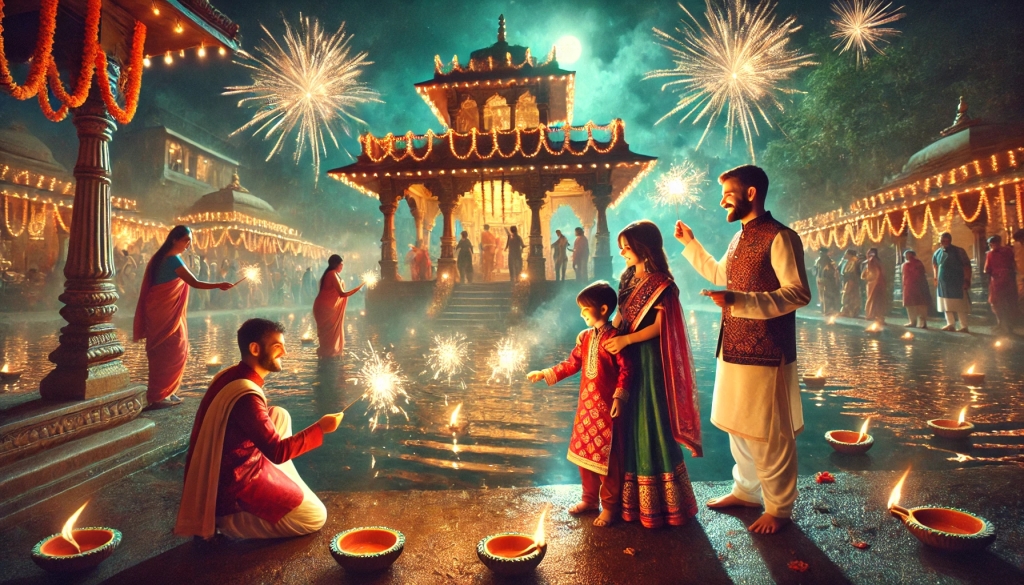
So, I opened the prompt bar and clicked on “Image by ChatGPT AI.” After three or four tries, the AI produced something truly surreal — people standing on water!
Apparently, it couldn’t differentiate between a temple tank and people near it. In one image, a woman even appeared to be walking on water! I tried refining my prompt again, hoping for something closer to reality.
Why the Image Felt Wrong to Me
The woman with sparklers was standing in a part of the temple tank where devotees usually take sacred dips. Lamps floated around her, though in reality, such lamps are small, placed on dried or green leaves with yellow flowers.
That’s when I realised: AI often misses cultural nuance. If you explain too much, it overthinks. Like a child, it keeps trying — sometimes beautifully, sometimes hilariously — until you reach your daily limit.
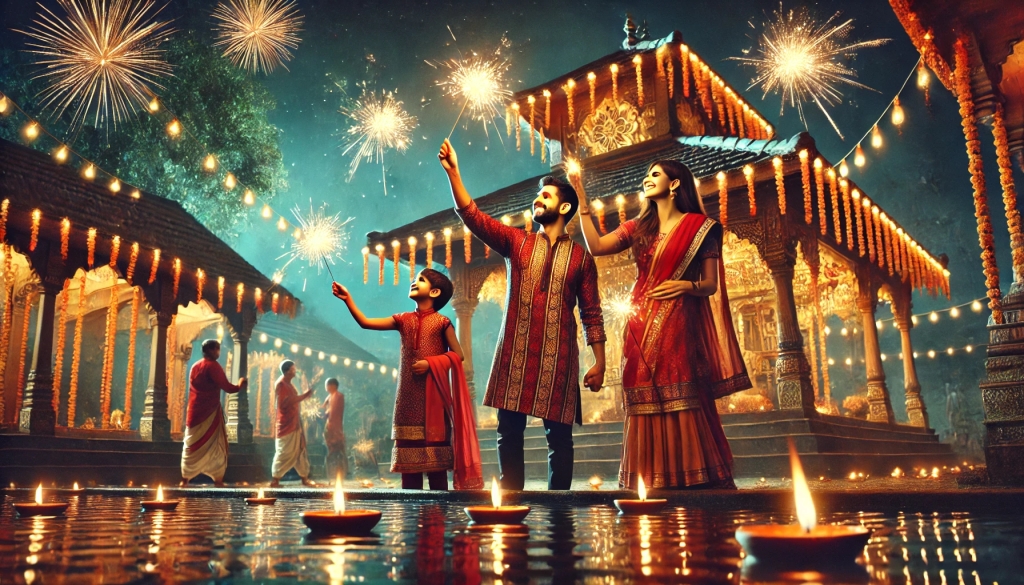
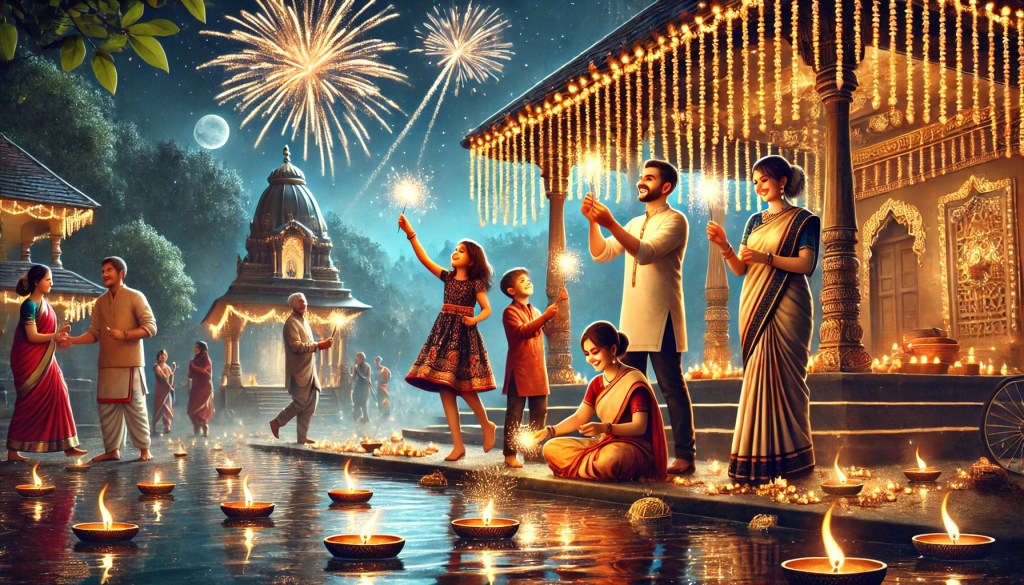
My family teased me for posting these images instead of real photos. Maybe they were right — AI art can look deceptively real, blurring the line between festive illusion and truth. That’s both exciting and a little unsettling.
My Growing Interest and Curiosity
Despite the teasing, I was hooked. There’s something magical about watching AI interpret human festivals. It brought out the lazy artist in me — the cherry on top of my creative sundae.
The very next day was Halloween. My sister sent real photos, and I decided to create my own version through AI, this time with better prompts.

Though it wasn’t spooky enough — just a happy neighbourhood celebrating trick or treat — it taught me the importance of phrasing. The right words can shape AI’s imagination. So, I decided to return to my Diwali prompts once again.

Each attempt brought me closer to understanding that the key lies in clarity — expressing exactly what you want the AI to visualise.
A Month Back: My Green AI Fingers
Back in September, while working with BookLeaf Publishing, I was paired with a graphic designer for my book cover. Around the same time, my IAA (Indian Authors Academy, founded by Sweta Samota) introduced us to using AI prompts for story outlines and summaries.
That inspired me to try AI for my cover visuals. I wrote a short, vague description — and yet, it produced a few decent samples. I kept them aside as rough references for my designer.
The Need for Clear Thought and Expression
There’s still much to learn. Human imagination is layered and complex — what delights me might unsettle someone else.
Sometimes, I even wonder — is my dream AI’s nightmare? The idea amuses me. To me, AI feels like a curious child — eager, adaptive, and learning every day. But it also makes me question whether we, the prompters, sometimes feed it confusion instead of clarity.
Parsing an Image Over Four Days
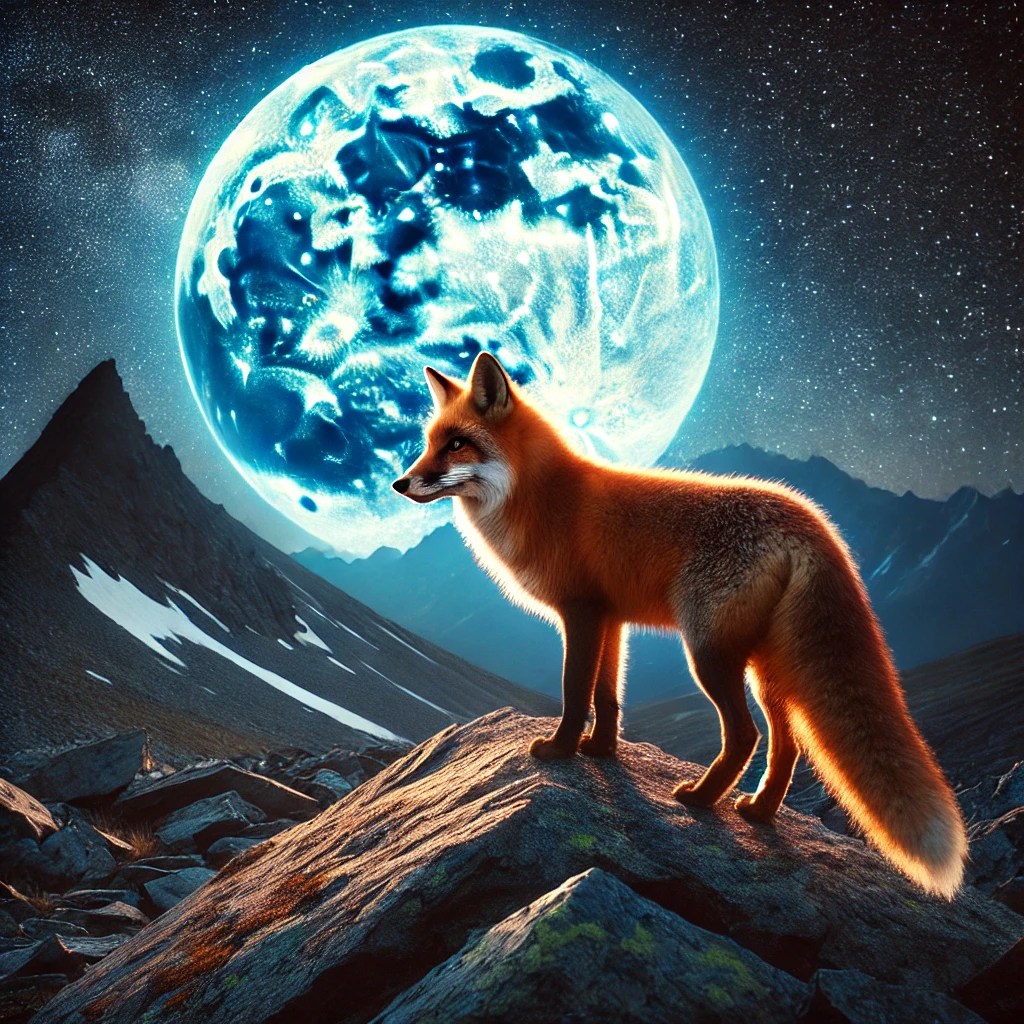
ChatGPT AI allows only two image edits at a time. It took me four days to create a fox image based on one of my poems. My prompts were too lukewarm, and the fox turned out rather dull!
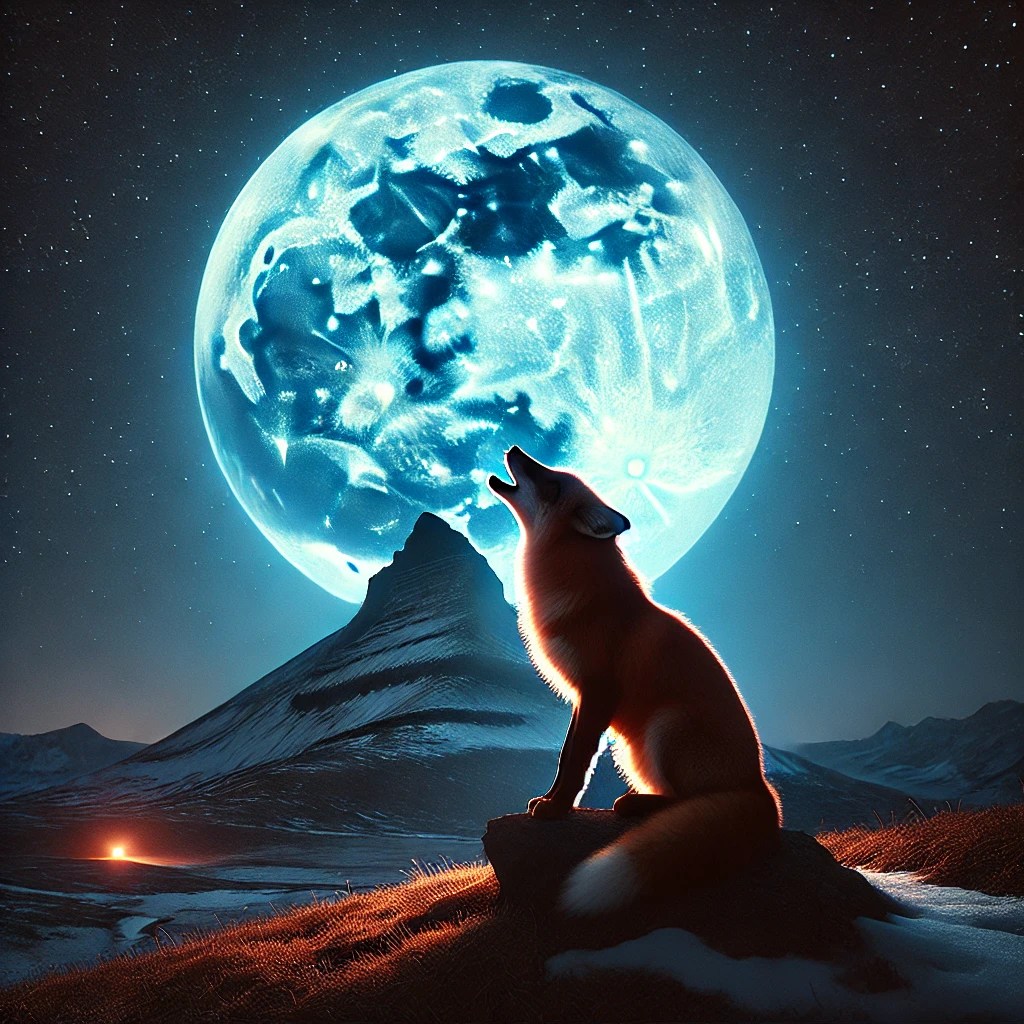
Yet, I admired the persistence. AI never tired of trying. It made me realise that clarity and cultural precision lead to better results. The AI world is like a mirror — reflecting our collective imagination, confusion, and cultural depth.
In Conclusion
I find this evolving AI world fascinating. Whether it’s fixing small creative details, experimenting with visuals, or simply playing with a virtual companion, it’s proof that creativity now belongs to everyone.
Yet, if ChatGPT could provide a list of referenced sites and images, it would be more authentic than it is right now. Transparency builds trust, and knowing the image sources would make AI-generated art feel more credible and respectful to human creators.
But a big question remains — who owns the copyright of AI-generated images?
The debate continues. For my part, I make it a point to credit AI every time I use its work.
Image Source: ChatGPT AI — based on prompts provided by Srividya Suryanarayanan.
 Itinerant Storyteller